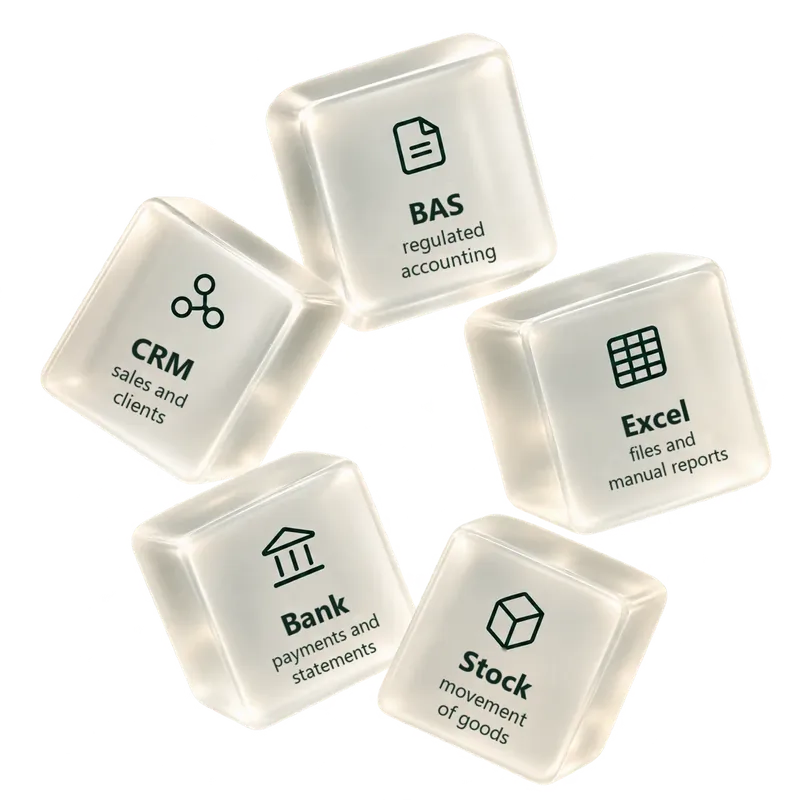
How many Excel spreadsheets does it take to run your business?
If it takes 17, the problem is not Excel. A financial figure is the result of decisions and actions in the business. If processes, accountability and data are not connected, no report will fix the system on its own.
We work with companies of 50-500+ people that need more than basic bookkeeping but are not yet SAP-scale corporations: manufacturing, distribution, logistics, agriculture, construction, chains.
Tick what you recognise in your company. These points go into your request, and we come to the first conversation with an analysis of your situation already prepared.
We study how finance, processes, accountability and data connect in the company. We look for causes, not just symptoms: where the problem starts, what it affects and what to change first.
We study how finance, processes, accountability and data connect in the company. We look for causes, not just symptoms: where the problem starts, what it affects and what to change first.
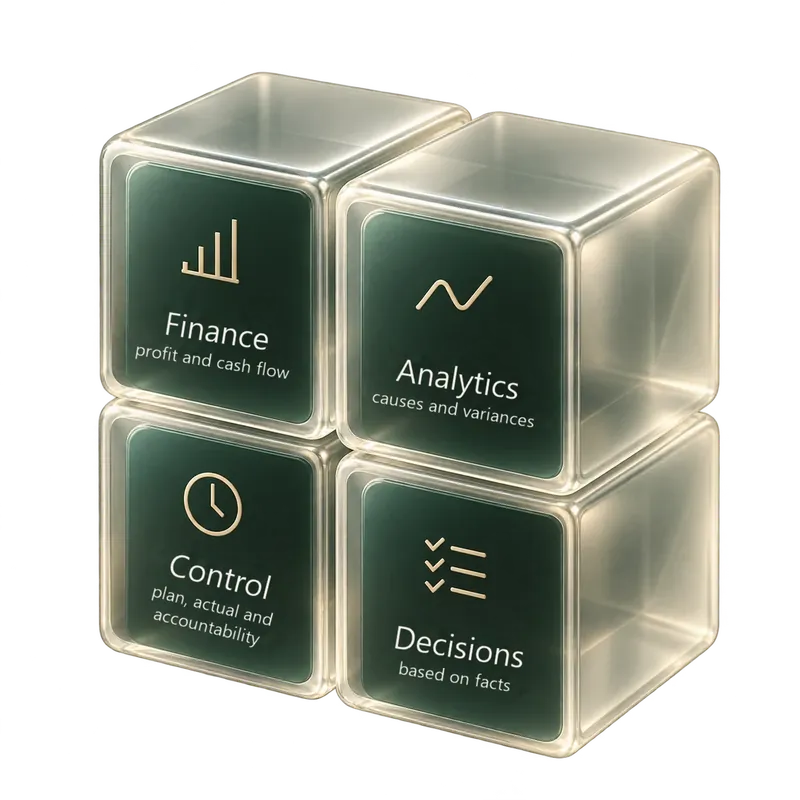
The core of the whole financial system. One interface where the owner sees in ten minutes how much each business line really earns and where money leaks. It includes unit economics: contribution margin by SKU, margin by segment and cohort analysis, all built on accounting data with no separate Excel files.
Not a file for investors but a working tool: a quarterly rolling forecast, 12-18 month scenario planning, sensitivity models. Plan and actuals are compared automatically, and deviations show up every week, not at the end of the quarter.
Cash flow as a decision tool, not an after-the-fact report. The owner sees the account balance one, two, three months ahead. Cash gaps are visible early, while they can still be avoided. Decisions on major spending, dividends and investments are based on the model.
When a business is a group of legal entities, management accounting is needed at group level. Consolidated P&L, balance sheet and cash flow across all companies, with intercompany transactions eliminated. The owner sees the group as one business and each entity separately, in one interface.
Reporting is only as accurate as the processes behind it. We set up where data originates and who is responsible for it across the whole company, not just in finance. Every employee knows their task in this flow. It is the foundation that accounting rests on.
We describe the result each function should produce, the tasks that get it there, who owns the result and how it is checked. This removes duplication, gaps and critical dependence on individual people.
We build analytics around management questions: not only what changed, but why, compared with what and how it affects the financial result. We set up metrics, plan vs actual and dashboards at the right level of detail.
We automate only once the logic of the process, data and management decisions is clear. It can be a dashboard, integration of existing systems, automated calculations or custom software, if standard tools really are not enough.
Works with a business as a system: examines what drives results, what is a cause and what is a symptom, where data originates and how a management decision will affect the financial result. Combines financial expertise with systems analysis of business processes.
15+years in corporate finance and management accounting
300+financial models for different business needs
20+management accounting systems implemented in the EU and Ukraine
Let us start with a conversation. Not a proposal.
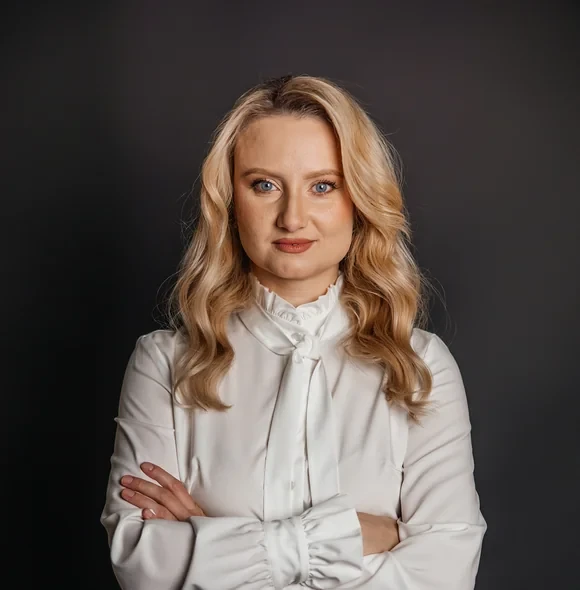
A 30-minute meeting with Anastasiia Saienko, founder of 42.finance. You will get a working hypothesis or a recommendation of who else to talk to.
30 minutes of consultation on your business's financial system